

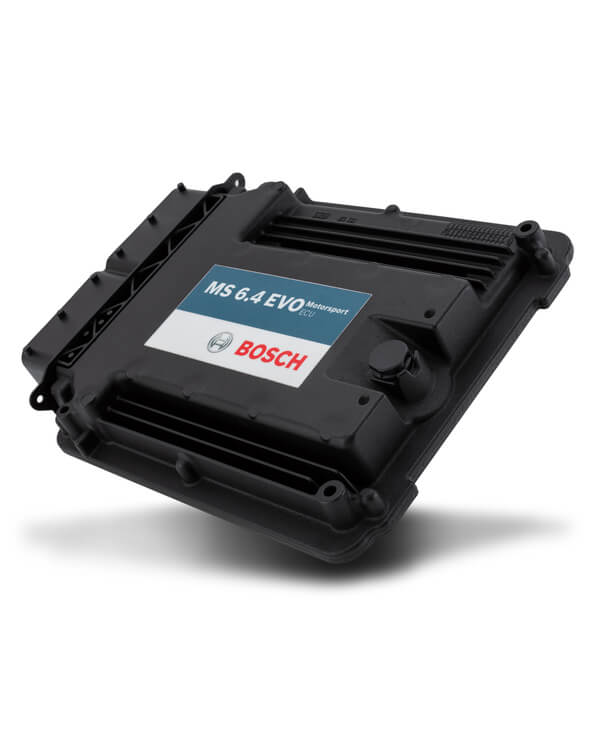
Featured Products

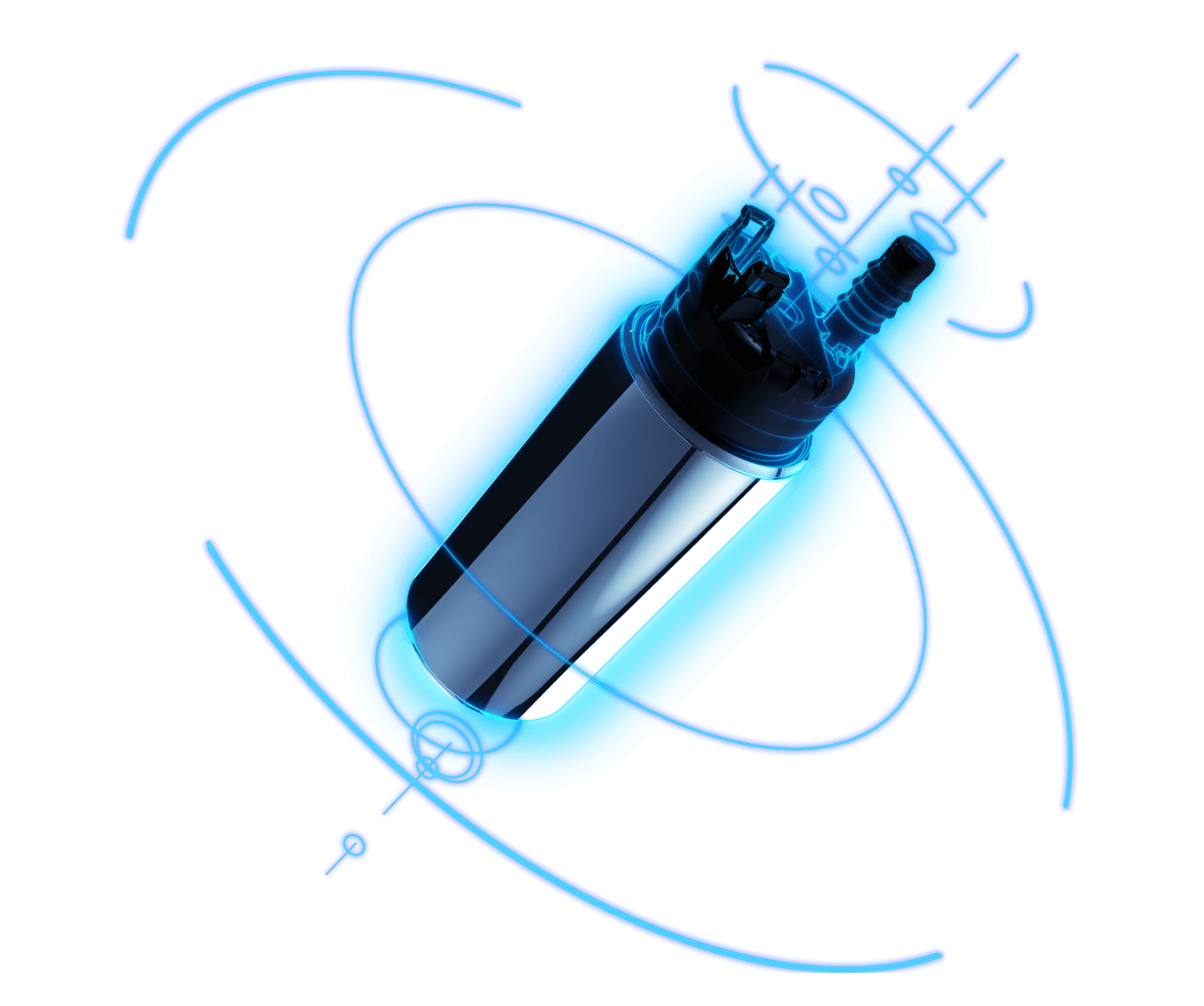
FPx-HF - In-tank Fuel Pump. Up to 540 l/h (BR540)
SKU: F 02U V0U 343-01 (Typically ships in <3 bus. days)
$280.50


LSU-4.9 Oxygen Sensor, Motorsport version
SKU: 0 258 988 001 (Typically ships in <3 bus. days)
$221.93
Tech & Product Overviews

Shannons SpeedSeries Technical Profile: Mercedes-AMG GT3 Evo
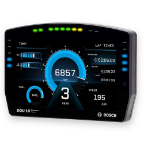
Bosch Motorsport is proud to be the Official Technology Partner of the Shannons SpeedSeries and to celebrate, we’ll be taking a deep dive into the technical side of these amazing vehicles throughout the year, to find out how Bosch Motorsport’s range of high-end electronics power them to success. Introduced in 2020, the Mercedes-AMG GT3 Evo stands as one of the oldest cars in the GT racing world. But don’t let its age fool you, the fan favourite Merc remains one of the top dogs in global GT racing. Mercedes-AMG sits as the reigning manufacturer champion of the global GT World Challenge rankings, and so far in 2026, has won the opening two rounds of the Intercontinental GT Challenge at Bathurst and the Nürburgring, alongside wins in GT World Challenge America, DTM and beyond. Australia is no different, with Tigani Motorsport taking three wins out of four so far in this season’s GT World Challenge Australia, with local star and Mercedes factory driver Jayden Ojeda taking wins at Phillip Island and The Bend alongside co-driver Paul Lucchiti, with their teammates Brendon Leitch and Sergio Pires taking the chequered flag on the Saturday at The Bend. Tigani’s three car lineup is rounded out by rising star Oscar Targett and Shane Smollen, who have also tasted podium success this year, vindicating Mercedes-AMG’s decision to award them title of official service partner for all AMG GT3’s in the region. Bosch Motorsport and Mercedes have had a relationship that has spanned decades. From the Motronic equipped Sauber Group C cars of the late 80’s, the Motorsport ABS equipped DTM 190E’s, to the spaceship like CLK-GTR’s that dominated GT1 racing with our early DDU’s, Bosch Motorsport has never been too far from Mercedes-AMG success. The AMG GT3 Evo is the latest in a long line of successful Mercedes-AMG platforms with Bosch Motorsport hardware, with our MS 6.2 ECU in charge of the rumbling 6.2L V8 that produces around 404kw and up to 650nm of torque depending on Balance of Performance. Bosch Motorsport’s world renowned M5 ABS system is tasked with bringing the big Mercedes to a halt, with its 12 stages of adjustable intervention giving the driver everything they need in the braking zone to go deeper and make that lap time or overtake. Feeding the driver information is the older generation Bosch Motorsport DDU 9, an amazing digital display unit that had featured in many top GT3 cars before being phased out in favour of our current generation DDU 10 and 11. The AMG GT3 Evo is a fine example of Bosch Motorsport’s commitment to supplying the absolute best hardware to manufacturers and grassroots racers alike. Whether you’re a four-time Formula One world champion or a weekend warrior, Bosch Motorsport provides the hardware to make your car truly special. You too can purchase these same products that have powered the AMG to success by heading to your nearest Bosch Motorsport Authorised Dealer today.
Learn more
Shannons SpeedSeries Technical Profile: Audi R8 LMS Evo II
Bosch Motorsport is proud to be the Official Technology Partner of the Shannons SpeedSeries and to celebrate, we’ll be taking a deep dive into the technical side of these amazing vehicles throughout the year, to find out how Bosch Motorsport’s range of high-end electronics power them to success. Audi’s exit from customer sportscar racing at the end of 2023 has seen the iconic R8 and its wailing V10 slowly disappear from grids globally. Here in Australia however, we don’t tend to conform to global trends, and thus the R8 LMS Evo II still lives on at the front of the GT World Challenge Australia powered by AWS field. The Evo II is the final generation of a car that has dominated Australian GT racing for over a decade. The numbers speak for themselves, with Melbourne Performance Centre ran R8s winning nine Australian GT/GT World Challenge Australia titles since 2011. Add in three Bathurst 12 Hour triumphs from global Audi teams and you start to get the full picture of just how dominant the R8 has been over the years. The 2026 GT World Challenge field sees five examples of the Evo II taking part, three from Melbourne Performance Centre and two from Team BRM, with both teams fielding stacked driving lineups that’ll keep the R8 as competitive as ever. 2025 Champions Broc Feeney and Brad Schumacher will look to defend their crown, with rising young star Valentino Astuti partnering Darren Currie in the sister Pro-Am MPC car, whilst Supercars stars Thomas Randle and Ryan Wood will look to spoil their party and bring the Audi’s success to Team BRM, with Randle partnering Mark Rosser and Wood continuing his partnership with Steve Brooks. Bosch Motorsport and Audi have a long and storied relationship, with Bosch Motorsport ECU’s being at the heart of iconic cars like the Group B Audi Quattro, Audi 90 GTO and the dominant Audi A4 Super Tourers of the 90s, all the way through to the devastatingly dominant Le Mans Prototypes of the 2000s and early 2010s. The R8 Evo II continues that relationship, with the Bosch Motorsport MS 6.4 ECU controlling the timing, fuel delivery and throttle response of the screaming naturally aspirated 5.2 litre V10, which produces around 430kw at 8,500 RPM and 550nm of torque depending on Balance of Performance restrictions. Helping to bring that 430kw to a halt is Bosch Motorsport’s world renowned M5 ABS system, with its 12 stages of adjustable intervention giving drivers maximum control over their braking, with the ability to tune the intervention to the conditions and changable fuel loads throughout the one hour race. The ABS M5 system's high frequency control cycle enables the system split-second adjustments that maximise braking force whilst preventing lockup, giving the pilot maximum confidence in the braking zone. Feeding the driver information is the previous generation Bosch Motorsport DDU 9. Whilst it may not be the latest class leading DDU 10 and 11 that can be found in some of its newer counterparts, the DDU 9 laid the foundation for those newer units, providing drivers and teams with the vital information needed to keep them up front and fighting for victories. The R8 LMS Evo II is a stunning example of Bosch Motorsport’s full suite of high-end electronics, with its incredible amount of success speaking to the quality and performance of the product, affirming our strong commitment to providing everyone from OEMs to the grassroots weekend racer with the best possible hardware to break lap records and win races. You too can purchase the same products that have powered the R8 to titles across the globe by heading to your nearest Bosch Motorsport Authorised Dealer today.
Learn more
Shannons SpeedSeries Technical Profile: McLaren Artura GT4
Bosch Motorsport is proud to be the Official Technology Partner of the Shannons SpeedSeries and to celebrate, we’ll be taking a deep dive into the technical side of these amazing vehicles throughout the year, to find out how Bosch Motorsport’s range of high-end electronics power them to success. The McLaren Artura may be considered the baby of the McLaren sportscar range, but the racing version has quickly established itself as a front runner in global competition, winning the last two Monochrome GT4 Australia Silver Cups, a British GT class title in 2024, alongside wins at Spa and Nürburgring in GT4 Europe and wins at Daytona and Indianapolis in last year’s IMSA Pilot Challenge, proving itself to be one of the premier platforms in the GT4 class worldwide. 2026 will see five examples of Woking’s finest hit the track in Australia, with Method Motorsport looking to complete a hattrick of Silver Cups, entering three cars, whilst Team Soutar adds a second Artura to their fleet, splitting their entries between Silver-Am and Silver. But what makes the Artura such a strong package? The GT4 retains the 3.0 litre twin-turbo V6 from its road going compatriot, but sheds its complex hybrid system, dropping 130kg instantly even before the usual race car tear down. Controlling the heart of the car is the Bosch Motorsport MS 6.4, whilst a Bosch Motorsport PBX 90 makes sure electrical power is going where it’s needed within the car. A serious car needs serious stopping power, and that’s where the six piston front callipers combined with massive 380mm x 35.6mm discs plus Bosch Motorsport M5 ABS comes in, giving drivers the confidence to go harder into braking zones, whilst also being able to manipulate the multiple intervention settings on the Motorsport ABS system throughout the course of a race to gain tenths over their opponents. Inside the car the driver is given all the information they need, when they need it through the Bosch Motorsport DDU11 Display Unit, which doubles as a data logger and diagnostic tool for the team back in the garage to look through and gain an advantage. The Artura GT4 is a prime example of Bosch Motorsport’s continued involvement in success globally, highlighting our strong commitment to providing everyone from OEMs to the grassroots weekend racer with the best possible hardware to break lap records and win races. You too can purchase the same products that have powered the Artura to wins across the globe by heading to your nearest Bosch Motorsport Authorised Dealer today .
Learn more
Official Motorsport Technology Partner of Shannons SpeedSeries
Bosch Motorsport Australia is proud to announce our partnership as the Official Motorsport Technology Partner of Shannons SpeedSeries . This partnership adds to Bosch Motorsport’s global involvement in sportscar racing, with the SpeedSeries bringing the world class GT cars that rely on our range of high-end electronics and performance components to Australian shores. Tune in this weekend as the series gets underway at Phillip Island, the first stop of their six round journey that takes them from Melbourne to Darwin and almost everywhere in between. Check out the calendar below! 2026 Shannons SpeedSeries calendar: Round 1: LIQUI MOLY GT Festival Phillip Island – 27-29 March Round 2: LIQUI MOLY GT Festival The Bend – 8-10 May Round 3: LIQUI MOLY GT Festival Queensland – 12-14 June Round 4: LIQUI MOLY GT Festival Darwin – 24-26 July Round 5: LIQUI MOLY GT Festival Sydney – 18-20 September Round 6: LIQUI MOLY GT Festival Sandown – 30 October-1 November
Learn more
Quality
Every Bosch Motorsport product has quality built-in. The same high-performance products tested in the highest levels of international motorsport are available for your car.

Experience
We know what makes the difference between the top two steps of the podium - and have for generations.

Passion
Passion for technology, continuous improvement and the success of our customers.